Aligning our conversations, investments, and leadership with the realities the data continues to show us
The inaugural edition of our "Business Insider Report | Economic Intelligence Brief" has officially hit mailboxes!
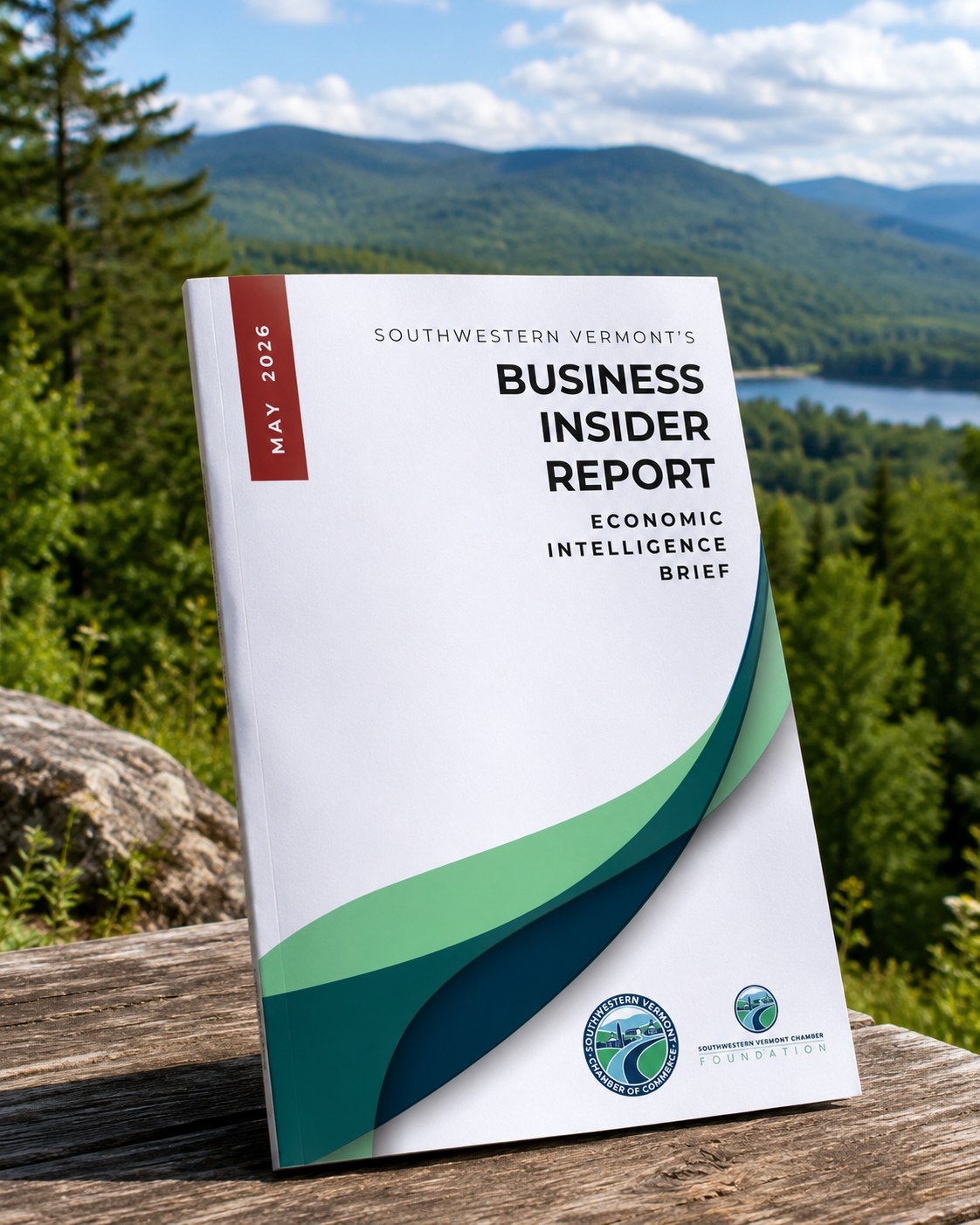
We mailed copies to our Investor Level members and complimentary editions to key stakeholders across Vermont as part of a broader effort to provide clearer, data-driven insight into the economic landscape of Southwestern Vermont.
Inside this first edition: regional economic trends, industry snapshots, business climate analysis, visitor and foot-traffic insights, investment perspective, and a deeper look at the opportunities and challenges shaping Bennington County and the broader Southwestern Vermont region.
This report is one of the value-added benefits of our higher-tier membership model. Chamber members can upgrade to our Partner, Champion, or Guardian membership level to receive a copy, along with additional benefits and access — including the next edition coming in December!
I’d like to take a moment to share with all of you some of the major takeaways and next steps we proposed in the report:
A Regional Hub Economy: Bennington functions as a tri-state service center, with non-resident visitors and commuters significantly expanding the daily population.
A Connected System: Population (an aging one at that), workforce shortages, and limited housing supply operate as one system — reinforcing constraints on growth within Bennington County (and outside of Bennington County).
Stability Without Scale: Core industries provide a strong foundation and generally stabilize our local economy, but labor shortages and housing limitations restrict expansion and diversification in the region.
Housing as the Central Constraint: Housing availability remains the primary barrier and one of the most actionable investment opportunities for the region.
Real Risk, Real Resilience: Demographic, economic, and climate risks are present, but so are strong Southwestern Vermont assets: community identity, institutional anchors, and regional collaboration.
So where do we go from here?
Treat housing as economic infrastructure: Accelerate workforce and middle-income housing development to unlock labor supply, support business expansion, and enable long-term population stability.
Align workforce pipelines with employer demand: Strengthen connections between education, training, and industry needs - particularly in healthcare, skilled trades, manufacturing, and emerging sectors.
Plan for a larger, non-resident daily population: Align infrastructure, transportation, and public investment with the reality that Bennington functions as a regional hub serving a population far beyond its residents (and will only grow with current downtown investments in Putnam, Benn High and the SVC Campus).
Support business growth and succession: Invest in entrepreneurship, capital access, and transition planning to sustain local ownership while enabling business expansion and modernization.
Advance generational leadership renewal: Expand pathways for emerging leaders to participate in decision-making while leveraging experienced leaders as mentors and institutional stewards.
Coordinate regionally, not municipally: Economic activity operates across borders - progress will depend on alignment among municipalities, institutions, and private-sector partners.
Embrace diversity as an economic advantage: Welcome and integrate new populations including immigrants, cross-border workers, remote professionals, and multi-generational talent to strengthen workforce capacity, cultural vitality, and long-term economic resilience.
Good decisions require good information. And if Southwestern Vermont is going to compete, grow, and thrive over the next decade, we must be willing to align our conversations, investments, and leadership with the realities the data continues to show us.
Always Onward,
Matt Harrington
CEO of the Southwestern Vermont Chamber Foundation