Southwestern Vermont businesses don’t have a revenue problem, they have an expense problem
October 2026
Every year, the Southwestern Vermont Chamber asks our business community a fairly simple question: How are you doing?
This year, the answer revealed an interesting contradiction.
Nearly 78% of businesses responding to our State of the Commerce Survey described themselves as thriving, growing, or stable. That's encouraging. These are not businesses collectively telling us that customers have disappeared or revenues have collapsed. Many continue to grow, invest, hire, and adapt.
But underneath that resilience is a growing financial pressure. Nearly three-quarters of respondents reported higher operating costs, making expenses the number-one challenge identified in the survey.
Taken together, the results point to a clear economic pressure facing our business community: Our businesses don't appear to have a revenue problem as much as they have an expense problem (generally, not of their own making).
That's an important distinction - and admittedly an oversimplification. Some businesses certainly face sales and customer challenges; attracting customers was among the concerns identified in our survey. But the broader pattern suggests that the more immediate pressure isn't simply generating revenue. It's keeping enough of that revenue after the bills are paid.
For many businesses, modest gains on the top line are being consumed before they reach the bottom line. The cost of raw materials and goods has increased. Healthcare and employee benefits remain expensive. Wages and inflation have risen. Insurance, utilities, construction, permitting, financing, and other costs of doing business continue to add pressure. Some businesses are navigating tariffs and changing supply costs as well.
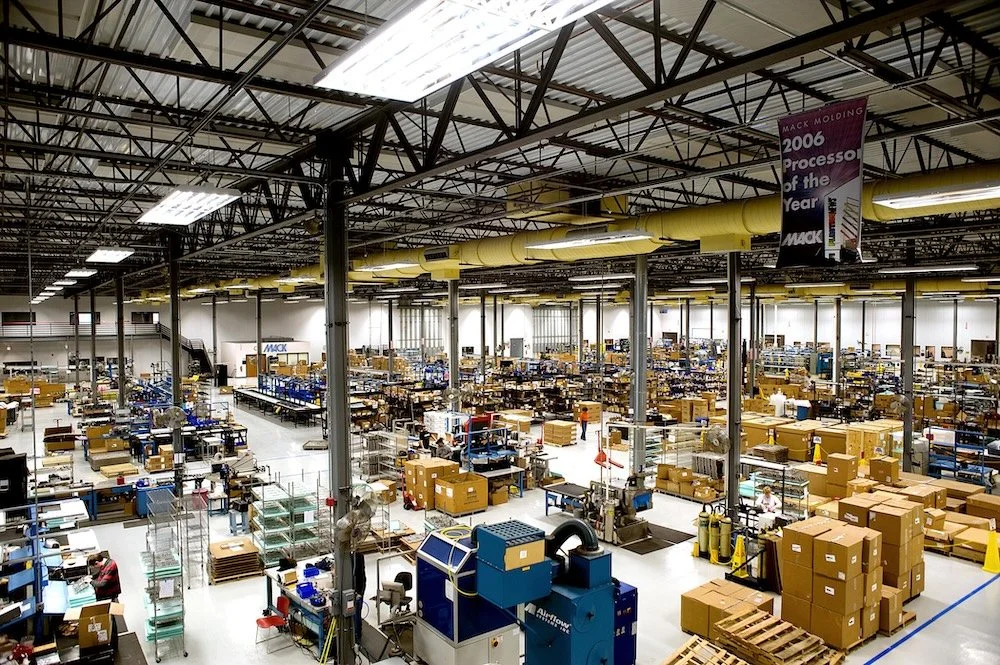
I was speaking with a local manufacturer recently who put this challenge into very real terms. His company relies on plastic resins, an oil derivative whose price can fluctuate significantly from month to month. At the same time, he is looking to invest in new manufacturing equipment, much of which simply isn't made entirely in the United States. A molding center his company purchased from Austria a couple of years ago for roughly $100,000 would cost more than $130,000 today, in large part because of the current tariff. That's a $30,000 increase before the machine ever reaches the factory floor. For a small or midsized manufacturer trying to modernize, become more productive, and remain competitive, those additional costs don't just squeeze today's margins - they can delay the very investments needed to grow tomorrow.
In other words, a business can have more customers, charge more, or generate more revenue than it did a few years ago - and still be less profitable. That's margin compression. A business owner would probably put it more simply: We're bringing in more money, but it costs us more money to make it. And that may be the most important economic message in this year's survey. This isn't primarily a story about collapsing demand. It's a story about resilient businesses trying to grow in an increasingly expensive operating environment.
There is another number in the survey that I find equally revealing. About 73% of respondents expressed confidence in their own organization over the next twelve months. Yet only about 30% expressed confidence in Vermont's economy over the next two to three years. That's a remarkable gap. Business owners are essentially telling us: I believe in my organization. I'm less sure about the environment around me.
Makes sense.
Confidence influences whether a business owner hires another employee, purchases equipment, renovates a building, signs a lease, launches another venture, or makes the next investment. Our businesses appear willing to bet on themselves. The challenge for those of us working in economic and community development is creating an environment they are equally willing to bet on.
For years, workforce shortages dominated nearly every business conversation. They haven't disappeared — nearly nine in ten businesses actively hiring still report difficulty finding applicants — but costs are now every bit as important as workforce
There are reasons for optimism. Bennington has roughly 275–300 housing units in the visible development pipeline, alongside continued investment in our commercial corridors, the Putnam Block, the former Southern Vermont College campus, the former Walloomsac Inn, and the Energizer property. Taken together, they point to something important: momentum.
At the Chamber and Chamber Foundation, that leads us to a central question: How do we get more people, businesses, investment, and outside dollars flowing into Southwestern Vermont? Our businesses are asking much the same. Survey respondents want greater focus on business attraction, tourism, downtown development, and regional storytelling — all different ways of growing our economic pie.
That brings us back to the confidence gap. Our business owners believe in themselves, but they're increasingly concerned about the environment surrounding them. We should take that seriously, while also recognizing what is working. Nearly eight in ten businesses remain stable, growing, or thriving; housing and major development projects are advancing; and our regional institutions are increasingly aligned.
I'm cautiously optimistic. Southwestern Vermont has real momentum, but momentum isn't automatic. We have to keep converting our quality of place into population, investment, jobs, and economic activity while making it easier — not more expensive — for the businesses already here to succeed.
Because economic development isn't only about attracting the next business; it's about creating the conditions for the businesses that already chose Southwestern Vermont to keep choosing us.